
Optos Daytona Retinal Imaging
Advanced retinal imaging with Optos Daytona in East Idaho.
Advanced Imaging. Better Insights.
Optos Daytona helps us capture more detailed images of the retina, supporting earlier detection and more informed care.
What is Optos Daytona?
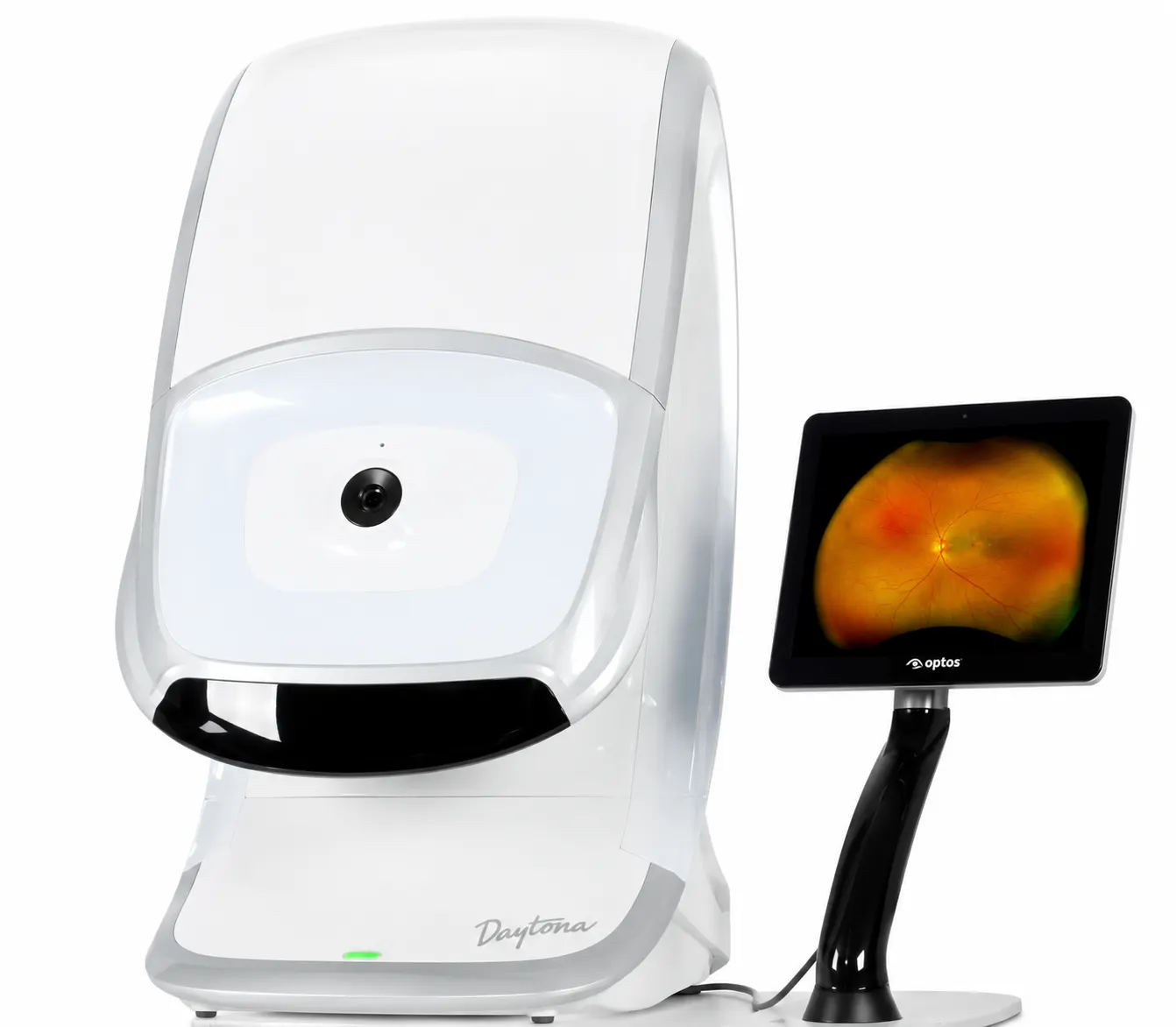
Optos Daytona is an ultra-widefield retinal imaging system that allows us to capture a detailed view of the retina in just a few seconds.
Unlike traditional retinal imaging methods that show only a portion of the retina, Optos technology provides a much broader view, helping doctors evaluate areas that might otherwise be difficult to see.
Why Retinal Imaging Matters
Many eye diseases develop silently. Conditions such as diabetic retinopathy, retinal tears, retinal detachments, glaucoma, macular degeneration may not produce noticeable symptoms during their earliest stages.
Advanced retinal imaging helps us identify potential concerns sooner and monitor changes over time.
Optos Daytona Technology
A Better View of Your Eye Health
Optos Daytona retinal imaging helps us document, monitor, and evaluate your eye health with detailed images that can be compared over time.
Track Changes Over Time
One of the biggest advantages of Optos Daytona imaging is its ability to create a permanent record of your retinal health. By comparing images from year to year, we can detect subtle changes that may otherwise go unnoticed.
This technology also provides valuable insight into overall health conditions that can affect the eyes, including diabetes and high blood pressure.
Fast, Comfortable, and Non-Invasive
The imaging process is quick and comfortable. Most patients are surprised by how fast the scan is completed, and the images are available immediately for review.
Frequently Asked Questions About Optos Daytona Retinal Imaging
Can retinal imaging detect eye diseases?
Retinal imaging may help identify signs of retinal tears, diabetic eye disease, macular degeneration, glaucoma, and other conditions.
Does the scan hurt?
No. The procedure is completely non-invasive and typically takes only a few seconds.
Do I still need a dilated eye exam?
Your doctor will determine whether dilation is necessary based on your individual needs and examination findings.
How often should retinal imaging be performed?
Many patients choose retinal imaging as part of their annual eye exam, although recommendations may vary depending on age and eye health.